Thursday, March 29, 2018

Điều kiện tiên quyết của người xuất gia.


Một người xuất gia chân chính, trước tiên chúng ta cần hiểu rõ sự quan trọng của một cuộc sống có kỷ cương, phép tắc, giới luật. Nếu không có kỷ luật trong đời sống tu hành, chúng ta khó khắc phục được dục vọng phiền não. Bởi vì, vọng tưởng ý dục như con trâu điên, có thể dụ dỗ, lôi kéo ta vào đường ma lối quỷ.
Nhiều người muốn thực hiện sự chuyển hóa bản thân, nhưng tập khí nhiều đời cứ đưa đẩy họ vào con đường luân lạc, vì không khéo tổ chức một cuộc sống khuôn khổ, nề nếp.Vì thế, lúc sắp nhập niết bàn, Đức Phật đã dạy các đệ tử phải lấy giới luật làm Thầy. Trong tranh chăn trâu của nhà Thiền, giới luật được tượng trưng bằng sợi dây buộc mũi.
Một số người hiểu Thiền một cách sai lạc, cho rằng lời dạy “Tùy duyên tiêu nghiệp cũ, hồn nhiên mặc áo xiêm”, hoặc “đói ăn mệt ngủ”của các thiền sư có nghĩa là Thiền chủ trương tự do thoải mái, không cần theo phép tắc lễ nghi. Thật ra, tự do không phải là buông lung phóng dật, muốn làm gì thì làm. Tự do không thể tách rời kỷ cương, đạo lý dù trong đời sống thường nhật hay trong nhà đạo. Kinh Lăng Nghiêm, Phật dạy: “Nếu không giữ gìn giới luật, dù đạt được thiền định, cũng rơi vào lưới ma”.Đối với các vị thiền sư, do đã nhận ra và hằng sống với Phật tánh của chính mình, nên cái hồn nhiên, tùy duyên ấy phát xuất từ tự tánh và biểu hiện ra hành động. Các ngài sống một cách tự do tự tại, ngược xuôi, thuận nghịch gì cũng đều hợp đạo lý. Còn chúng ta, khi chưa hoàn toàn sống được với bản tâm thanh tịnh thì không bao giờ quên những giới luật phải gìn giữ, không bao giờ được đồng hóa sự phóng khoáng tự tại của những bậc đã chứng ngộ với sự phóng túng tự do của kẻ phàm phu tục tử.
Đạo Phật là một tôn giáo không nặng về thần quyền, mà trả lại cho con người những giá trị vốn có; con người là chủ nhân vũ trụ và của chính mình. Vì vậy, đạo Phật là đạo tự lực, đặt nền tảng trên đạo lý nhân quả và có tinh thần nhân bản rất cao. Thông thường, gặp chuyện đau khổ hay bất như ý, chúng ta hay đổ lỗi cho người khác mà quên nhìn lại xem mình có lỗi hay không. Phật dạy, từ vô lượng kiếp, do thân miệng ý của chúng ta đã tạo biết bao nhiêu nghiệp thiện ác, rồi theo nghiệp thọ sanh, lẩn quẩn mãi trong vòng sanh tử. Những điều này gọi là may mắn hay rủi ro, những người gọi là ân hay oán đến với mình, đều chiêu cảm từ nhân mình đã gieo từ thuở trước. Có nhân, cộng thêm những duyên hỗ trợ, nhất định phải có quả. Lý nhân quả là một chân lý muôn đời, nên người hiểu đạo luôn có tinh thần trách nhiệm và tự lực, không hướng ngoại tìm cầu, cũng không bao giờ đổ lỗi cho ai.
Lúc Đức Phật gần nhập niết bàn, ngài A-nan hỏi Phật bốn vấn đề như sau:
            1. Nương vào pháp nào để trụ?
              - Nương vào Tứ Niệm Xứ.
            2. Sau khi Phật diệt độ, lấy ai làm Thầy?
              - Lấy giới luật làm Thầy.
            3. Khởi đầu mỗi kinh ghi chữ gì?
              - Như thị ngã văn.
            4. Tỳ kheo ác tánh trị bằng cách nào?
              - Trị bằng cách mặc tẩn.
Ở đây chúng ta chỉ bàn vấn đề giới luật. Quả thực giới luật là bậc Thầy cao cả của hàng tứ chúng con Phật. Dù chúng ta đang tu theo pháp môn nào, cũng phải theo lộ trình Tam vô lậu học là giới - định - tuệ. Giữ giới là dừng mọi việc ác, làm mọi hạnh lành, tạo dựng cho mình một đời sống căn bản đạo đức. Người xuất gia muốn xây dựng lầu cao trí tuệ, phải xây đắp nền móng giới luật vững vàng.
Vào thời Đức Phật còn tại thế, mỗi năm từ rằm tháng tư đến rằm tháng bảy, chư Tăng phải thực hiện chế độ an cư, nghĩa là yên ở nơi một trú xứ thu nhiếp các căn, nỗ lực tu tập giới - định - tuệ. Nguyên nhân đầu tiên Đức Phật đặt ra chế độ này, là vì trong ba tháng hạ, ở Ấn Độ mưa nhiều, nước ngập cả lối đi, sau đó côn trùng sinh sôi nảy nở, nên trở ngại cho việc đi hoằng pháp và vô tình giẫm chết côn trùng. Sau ba tháng cấm túc, Phật nhận thấy nhiều vị tỳ kheo đắc Thánh quả, nhờ ít đi lại, tránh bớt các duyên và quyết liệt tu hành. Do kết quả đó nên sau này, chế độ cấm túc an cư trong ba tháng hạ được duy trì mãi trong Tăng chúng.
An cư phải đi đôi với kiết giới. Sinh hoạt của chư Tăng trong thời gian này khác với ngày thường. Những ngày bình thường, do duyên sự bề bộn, các vị có thể du phương làm phật sự, kỷ luật trong Tăng đoàn có khi lơi lỏng. Nhưng trong ba tháng hạ, mọi việc đều thu xếp gọn lại, chư Tăng chỉ đi lại giới hạn trong khuôn viên của tự viện; chỉ có những vị có duyên sự đặc biệt, phải xin phóng giới mới được ra ngoài. Mới nhìn, chư Tăng có vẻ rãnh rỗi, không bận tâm về sinh kế vì nhờ phật tử hỗ trợ cúng dường; nhưng thật ra nội tâm của các vị quả là một trường chiến đấu! Một mặt phải khép mình vào một kỷ luật hết sức nghiêm khắc, mặt khác phải chiến đấu không ngơi nghỉ với bao tập khí phiền não. Nhờ vậy, sau thời gian kiết hạ, nếu vị nào giữ giới tinh nghiêm, nỗ lực tu học, có sự tỉnh lực thì sẽ có tiến bộ đáng kể. Nơi nào tổ chức tu hành nghiêm túc sẽ có thể sản sinh những người xuất cách, còn nếu tổ chức lơi lỏng sẽ khó đào tạo được Tăng tài. Như vậy, người xuất gia nào nếu sắp xếp được công việc, tránh bớt các duyên, hàng năm có thể tổ chức cho mình một thời gian nhất định nào đó để tĩnh tu.
Như đã nêu ở trên, việc tu hành không có nghĩa chỉ chú trọng trong ba tháng hạ, bởi vì đó là một tiến trình liên tục và trường viễn. Tuy nhiên, vào những ngày bình thường, do làm nhiều phật sự phải tiếp duyên xúc cảnh, nên sự thúc liễm thân tâm không mạnh mẽ bằng thời gian ở yên trong một môi trường thanh tịnh, cùng đại chúng tập trung. Đặc biệt với các vị tăng ni trẻ, trường hạ còn là nơi thuận lợi để được gần gũi, học hỏi về giới hạnh và sở tu của các vị tôn túc giáo phẩm, những bậc đạo cao đức trọng đã có  quá trình tu chứng.
Trở lại vấn đề giới luật, ngoài việc áp dụng cho từng cá nhân người tu, còn có những nguyên tắc sống chung trong tập thể Tăng đoàn. Tinh thần lục hòa cộng trụ là động lực thúc đẩy Tăng đoàn phát triển và hoàn thiện, trong đó có sự bình đẳng là trọng tâm: bình đẳng về vật chất (thân hòa đồng trụ, lợi hòa đồng quân), bình đẳng trong luật chế (giới hòa đồng tu), hòa hợp trong tư tưởng và lời nói (kiến hòa đồng giải, ý hòa đồng duyệt, khẩu hòa vô tránh). Nhờ sống theo tinh thần này nên đại chúng có sự hòa hợp từ hình thức đến nội dung, như lời Phật dạy: “Để Tăng già được ổn thuận, để kềm giữ các tỳ kheo khó kềm giữ, để các thiện tỳ kheo được ổn cố tự thân”. Thanh tịnh thân tâm từng cá thể và hòa hợp trong đời sống tập thể là ý nghĩa sâu xa và cao quý của hai chữ Tăng già (Sangha).
Kinh Hoa Nghiêm, Đức Phật dạy: “Giới là cội gốc của Bồ đề, là cửa ngõ của Niết bàn, là chiếc thuyền đưa chúng sanh qua biển sinh tử”. Giới luật nhà Phật không phải là những giáo điều, những quy định pháp lý cứng nhắc, mà là những nguyên tắc sinh hoạt tu hành có tính tự nguyện. Mỗi người có quyền giữ gìn tôn trọng hay không, và tự mình được hưởng kết quả tốt hay gánh chịu hậu quả xấu tùy hành động của mình. Tịnh hóa đời sống tu hành bằng con đường giới luật không những có tầm quan trọng đặc biệt đối với cộng đồng tăng lữ và cá nhân từng tu sĩ xuất gia, mà còn ảnh hưởng sâu rộng đến môi trường xung quanh và toàn thể xã hội. Bởi vì mỗi người đều có quan hệ hữu cơ với mọi người mọi vật, nên người tu sĩ với ba nghiệp thanh tịnh sẽ có sức cảm hóa lớn đối với cộng đồng, không những bằng khẩu giáo mà còn bằng thân giáo. Do vậy, Tăng đoàn hòa hợp thanh tịnh sẽ giúp tịnh hóa nhân sinh, từ đó góp phần an định xã hội.
Tích cực gìn giữ cấm giới là nội dung đầu tiên và căn bản, luôn được đề cao và nhắc nhở trong suốt cuộc đời hành đạo của người xuất gia. Từ bước căn bản đầu tiên ấy, người xuất gia mới xứng đáng là Trưởng tử Như Lai, là bậc pháp khí trong hàng Tăng bảo, đem Phật pháp xây dựng thế gian, làm cho Phật pháp xương minh, tất cả chúng sanh đều nhuần ơn pháp vũ.HET=NAM MO BON SU THICH CA MAU NI PHAT.( 3 LAN ).TINH THAT KIM LIEN.THICH NU CHAN TANH.GIAC TAM.AUSTRALIA,SYDNEY.29/3/2018.    

Tuesday, March 20, 2018

The Eagle.

C waterlogged Eagle is an important rite of ritual transmitted each afternoon at the monastery as the Mahayana Buddhist tradition, especially during the annual Retreat. According to the narrative, one day the Buddha traveled to meet a eagle bird catching small birds eat meat. This eagle has a very large dimension, each time its mouth open, a sucking of it occupies a range of several kilometers, all the small birds are attracted to its mouth. Seeing the killing too much so the Buddha was compassionate. He taught that "  all living creatures die of fear of death, so do not kill and do not kill ." The Eagle himself thought: "My daily food is raw meat of birds, now the Buddha does not feed, take anything to feed this body ." The Buddha said:From here to the nearest temple to the monks for food
Similar to the ritual offering of Mongol porridge in the afternoon, the ritual of offering the Eagle at noon was born there, and over two thousand years this tradition continues to be preserved and maintained. Some wonder that, just offering seven (7) rice seeds, can fill enough eagles, and seven rice seeds can replace raw meat? As stated in the verse, "  Faith is unquestionable, compassion is unconstrained, broken in the world, universal in the world. " Meaning: " French force hard to think, compassion limitless, seven seeds turn ten, turn around the boundless realm. The Venerable Master also teaches that due to the mantra of the Buddha, the seven seeds of rice will turn into mullahs, which will cause the Eagle to eat enough, thanks to the blessings of kindness. 


The first year I was taught to present to Chen Chen San, Head of Hai Duc Pagoda, Wen is a virtuous monk of PG Khanh Hoa; He has a younger brother who is also a Buddhist monk and is staying at Nghia Dung Pagoda in Dien Khanh, Khanh Hoa. Wen Chun San General who is tall and beautiful, good in ritual, although the Khanh Hoa but famous in the clinical diagnosis Hue. Wen told me to listen to Eagle, I immediately press the orange on the forehead and start shouting: 
hodaibang-ventang
Illustrated by T. Pho Huan
Kim attending Eagle 
Minerals Than They gem 
iron from the blood Fund 
Nectar All Fullness. 
Enlightenment
 (7 times).
Interpretation :  
"Birds of gold Eagle wings 
, wild devils with her 
mother La Rong 
Huong rich orange."
Wanna hear the shake of my head because I'm too bad. Wen then instructed my voice training, the first three sentences must be voiced, the end of the fourth sentence must be down, the mantra must be correct 7 times and to break into 3 times, the first 2 times each turn, and three times a turn, stretching out and down the accent. When rehearsing several times, San Chen San jubilantly nodded and I became a real attendant for the next four years at Hai Duc Pagoda. Every noon, I hold the responsibility of eating animals, marking, offering eagles and attendees for the two in the Tri Nghiem and Wen Tu (HT Thien Sieu). I occasionally went to work as a attendant for Wen Ziyi in Dieu Quang Nunnery, Kim Quang Pagoda or Long Son Pagoda in order to extinguish the eagle, then I also have the opportunity to take the road and shout eagle when Wen Hung (from Phan Thiet) in Nha Trang. 
Often, the work of attendant and echelon of monks, nuns, or newly ordained monks. From the day of my household up to now, I have heard a lot of people crying loudly, some people shout very well, but there are people who can not hear, there are also strange how to listen (people shout the first 4 to 3 times). From the day I went abroad, I also heard many new eulogies, but last year, during the retreat at Quang Duc Monastery, Hạnh Đức (Disciple of the Venerable) preached Very well, right tone and clear. 
The above is a very small detail in the activities of meditation, but if the subtle attention to the review, we see the Buddhist teacher uses many means of birth outside the thinking of the world. The compassion of the Buddha spread across all kinds of sanh linh, including grass trees, soil, mountains, rivers, sea ... conveyed to the disciples of the Buddhist practice, so the disciples of the Tathagata Ca can not fail to perform the compassionate virtue of the Buddha.END=NAM MO SAKYAMUNI BUDDHA.( 3 TIMES ).VIETNAMESE TRANSLATE ENGLISH BY=THICH CHAN TANH.THE MIND OF ENLIGHTENMENT.VIETNAMESE BUDDHIST NUN=GOLDEN LOTUS MONASTERY=AUSTRALIA,SYDNEY.21/3/2018.
Cúng Đại Bàng.

Cúng Đại Bàng là một nghi thức quan trọng trong lễ cúng Quá Đường mỗi buổi trưa ở các tự viện theo truyền thống Phật Giáo Đại Thừa, đặc biệt là mùa An Cư Kiết Hạ hằng năm. Theo lời thuật lại trong khế kinh, ngày kia Đức Phật đi du hóa gặp một con chim Đại Bàng bắt các loài chim nhỏ ăn thịt. Chim Đại Bàng này có chiều kích rất lớn, mỗi lần há miệng, một hơi hút của nó chiếm một phạm vi nhiều cây số, tất cả các loài chim nhỏ đều bị cuốn hút vào miệng nó. Thấy việc sát sanh quá nhiều nên Đức Phật đã từ bi giáo hóa. Ngài dạy rằng “ tất cả chúng sanh đều ham sống sợ chết, do đó chớ giết và chớ bảo giết”. Chim Đại Bàng tự nghĩ: “thực phẩm hằng ngày của mình là thịt sống của các loài chim, nay Phật không cho ăn, lấy gì để nuôi thân mạng này”. Phật dạy: “từ đây về sau ngươi về chùa nào gần nhất để quý Tăng Ni cho ăn”. 

Tương tự như nghi thức cúng cháo Mông Sơn Thí Thực buổi chiều, Nghi thức cúng Đại Bàng buổi trưa được phát xuất từ đó, và hơn hai ngàn năm nay truyền thống này vẫn tiếp tục gìn giữ và duy trì. Có người thắc mắc rằng, sao chỉ cúng bảy (7) hạt cơm, có thể làm no đủ loài đại bàng, và 7 hạt cơm có thể thay thể được thịt sống? Theo như trong bài kệ ghi rằng “ Pháp lực bất tư nghì, từ bi vô chướng ngại, thất liệp biến thập phương, phổ thí châu sa giới” Nghĩa là: “Pháp lực khó nghĩ bàn, từ bi vô giới hạn, bảy hạt biến mười phương, biến khắp cõi vô biên”.Các Hòa Thượng cũng dạy rằng do nguyện lực của thần chú của Phật mà bảy hạt cơm kia sẽ biến thành cam lồ pháp nhũ khiến cho loài Đại Bàng ăn no đủ, nhờ lực gia trì của thiện niệm. 


Năm đầu tiên tôi được dạy đến trình diện Ôn Trừng San, Trụ Trì Chùa Hải Đức, Ôn là một bậc danh tăng giới đức của PG Khánh Hòa; Ôn có người em ruột cũng xuất gia tu hành và đang làm trú trì Chùa Nghĩa Trũng ở Diên Khánh, Khánh Hòa. Ôn Trừng San tướng người cao lớn và đẹp đẽ, Ôn giỏi về nghi lễ, mặc dù là người Khánh Hòa nhưng lại nổi tiếng trong khoa nghi chẩn tế theo truyền thống Huế. Ôn bảo tôi hô Đại Bàng nghe thử, tôi liền bắt ấn cam lồ đưa lên trán và bắt đầu hô: 
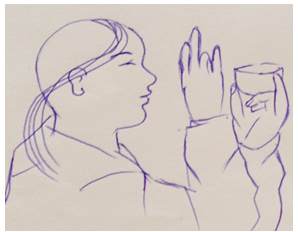
hodaibang-ventang
Minh hoạ của T. Phổ Huân
Đại Bàng Kim Sí Điểu
Khoáng Dã Quỹ Thần Chúng
La Sát Quỹ Tử Mẫu
Cam Lồ Tất Sung Mãn.
Án Mục Đế Tóa Ha
( 7 lần).
Dịch nghĩa
“Chim Đại Bàng cánh vàng
Chúng quỷ thần dã hoang
Cùng mẹ con La sát
Hương cam lồ sung mãn”.
Ôn nghe xong lắc đầu vì tôi hô tệ quá. Sau đó Ôn chỉ dạy luyện giọng cho tôi, cuối 3 câu đầu phải lên giọng, cuối câu thứ 4 phải xuống giọng, câu thần chú phải hô đúng 7 lần và phải ngắt ra làm 3 lần, 2 lần đầu mỗi lần 3 biến, và lần ba 1 biến, kéo dài ra và xuống giọng. Khi thử hô vài lần, Ôn Trừng San hoan hỷ gật đầu và thế là tôi trở thành thị giả tống thực trong suốt bốn năm sau đó tại Chùa Hải Đức. Cứ mỗi trưa, tôi giữ trách nhiệm lo chén súc sanh, đánh khánh, cúng đại bàng và làm thị giả cho hai Ôn Trí Nghiêm và Ôn Từ Đàm (HT Thiện Siêu). Thỉnh thoảng tôi được đi làm thị giả cho Ôn Trí Nghiêm ở Ni Viện Diệu Quang, Chùa Kim Quang hoặc Chùa Tỉnh Hội Long Sơn để hô đại bàng, rồi tôi cũng có dịp hầu quả đường và hô đại bàng khi Ôn Hưng Từ (từ Phan Thiết) ra cúng ở Nha Trang. 
Thông thường, công việc làm thị giả và hô đại bàng của tiểu Tăng, tiểu Ni, hoặc các vị mới xuất gia. Từ ngày xuất gia đến giờ tôi được nghe rất nhiều chú tiểu hô đại bàng, có người hô rất hay, nhưng có người hô nghe không được, cũng có người chế biến cách hô nghe rất lạ (có người hô 4 câu đầu đến 3 lần). Từ ngày ra hải ngoại đến nay, tôi cũng được nghe nhiều vị mới xuất gia hô đại bàng, nhưng vào năm ngoái, trong khóa An Cư tại Tu Viện Quảng Đức, chú Hạnh Đức (đệ tử của Thượng Tọa Như Điển) hô đại bàng rất hay, đúng giọng điệu và rõ ràng. 
Trên đây là một chi tiết rất nhỏ trong sinh hoạt thiền môn, nhưng nếu tinh tế để ý quán xét, chúng ta thấy bậc giáo chủ của đạo Phật dùng nhiều phương tiện độ sanh ngoài sức nghĩ bàn của phàm tình thế nhân. Lòng từ bi của đức Phật tỏa rộng khắp vạn loại sanh linh, kể cả cỏ cây, đất đá, núi sông, khe biển…truyền đạt cho hàng đệ tử xuất gia hành trì, do vậy là đệ tử của Như Lai (Phật Thích Ca) không thể không thực hiện được hạnh từ bi, lợi tha của bậc đại giác Thế Tôn.HET=NAM MO BON SU THICH CA MAU NI PHAT.( 3 LAN ).TINH THAT KIM LIEN.THICH NU CHAN TANH.GIAC TAM.AUSTRALIA,SYDNEY.21/3/2018.
CHINESE APPENDIX
KNOWLEDGE ISSUES
THE BUDDHISM OF THE BUDDHA
East Asians often have worship practices, not just worship at the communal house, pagoda, or temple, which they worship at home. The worshiping tradition is a fine custom, but if it is not understood and does not do the right thing, it becomes a form of superstition. Buddhism called superstition is the precepts (sīlabatupādāna).
The meaning of worship is a custom when worship is to show respect, admiration, and gratitude. Buddhists worship the Buddha by honoring an enlightened One who outlines the path of enlightenment for sentient beings who practice rebirth;the masses worship a king or a general for admiring a hero who has benefited the country; Descendants of grandparents and grandparents to parents for their deep gratitude to those who gave birth to themselves ...
If worshiping by believing that sacred worship is a blessing, it is superstitious. The righteous Buddhist does not worship with such a concept.
On the form of worship at home: For Buddhists should only set up two altars are the altar of the Buddha (the Southern Buddhists only worship or Buddha statue, because the teacher y), ancestor altars (grandfather, grandmother, father, mother or relatives are past). The location of the altar is the most important place in the house, either in the middle of the house, or in the living room, or in a separate room, the altar should be placed higher than the altar of the ancestors.
The altar decoration: On the altar of the Buddha should only put a incense burner, lamps, a fresh flower vase, can design more light bulbs for the light. On the ancestors altar as well as the Buddhist altar and can add a plate of fruit (large plates to the fruit). Theravada Buddhism does not use the gas of the beak, so Buddhists of Nam Tong do not worship the beak on the altar.
Ritual worship: In the house has set up worship places, especially the Buddhist worship, Buddhists should worship two daily - morning and evening. Following ritual:
- Offering flowers (at least twice a month, full moon and 30); or flower canvas, nylon flowers are also.
- Each evening to burn incense, light three compressed incense on each church.
At the time of offering incense, pay homage to the Buddha 3 bow (the first one is the intention of the Buddha praised the degree of self-enlightenment, the second, the ritual appeal of the teachings were perfected by the Buddha, Raising them to the Dharma practice of the Buddha).
If every family in the line of practice, every morning or morning, the Buddhist family in the chanting ceremony of the Three Jewels and the practice of thought.
On the occasions of celebrating at home, such as wishful thinking, prayers, raised boys, anniversaries ... there are some to go home to make offerings, decorate the altar, incense, fruit Make offerings increase.
The Theravada Buddhists just offered offerings on incense sticks, incense lamps, flowers, aromatic oils, and no offerings on the altar of the Buddha.
In short, Buddhists worship the Buddha at home with the intention of paying homage, and also to remind ourselves to follow the Buddha's example; Worship must have the right meaning with right understanding, not follow superstition.
PROBLEM OF THE BUDDHIST
Buddhists are laypeople, should have rituals appropriate to their role.
When Buddhists socialize with outside society, follow common rituals that people often do, such as shaking hands, crossed arms nodding, etc .. Vietnamese people do not ritual greetings with Typical forms, depending on the level of each person.
When Buddhist contact with the religious should have religious rituals, the most beautiful form is hands folded salute. This form is common in Buddhist countries such as India, Burma, Thailand, Cambodia, Laos, etc. .. people greet each other by hand. Buddhists should not say that the hand of the secular clergy e broke tent tam guilty; That's just a social etiquette.Buddhists meet each other should greet each other, or when someone wrapped his hand to greet me, I must bow to meet the ceremony; So you have to.
When Buddhists meet monks, one of the following four rituals can be applied:
Abhivāda, there are three ways of bowing with five bodies touching the ground, squatting, bowing and bowing. The monk prostrated monks at the temple and when the monks arrived; But do not worship when the monk is sleeping or he is busy working, or he is not dressed up.
2. Stand up to welcome (Uṭṭhāna), gesture to stand up from the seat when the monk is coming. This ritual is applicable at all times; Buddhists sitting in the house or at the bus stop or public meeting place when the monk approached showed reverence by standing up, without bowing. That is also called right.
3- Hands folded (Añjalīkamma), hands clasped hands facing the monk standing in front. This ritual can also be applied at all times; Buddhists come to the temple to meet the monks are in working status or not wearing uniforms, he can hand greets; Even if you meet the monks in public, he can also fold his hands without saying.
4. Sāmīcikamma, showing polite gesture in addition to the three rituals. This situation is easy to implement in all circumstances; a Buddhist who is traveling on a boat, carrying, carrying, carrying, carrying ... no hands free to worship if meeting the monk, then just nods greeting, or eyes with a smile , or say hello, or give way ... that is also the expression of reverence.
In short, the Buddhist ritual of course must have, because the Buddhist is a virtuous person, whose virtuous person is cultured, ritual is one of the cultural forms. However, there are rituals, but not so subtle as to make others uncomfortable; To be flexible, perform proper rituals. Reverence or politeness is derived from good heart.
THE BACKGROUND OF THE PHENATE
Layman's clothing has a variety of patterns, depending on the age, according to ethnicity.
Buddhists in social activities, clothes as you like, whatever. But do not overdo it, unworthy of the virtue, conduct of a Buddhist monk; Do not let others laugh at their low morale. It's OK.
Talk about Buddhist costumes in religious activities, when visiting the temple, when meeting with monks. The Buddha does not have a rule on the costumes of lay people. But try to imagine how the lay Buddhist saint's attire when they came to the temple, then deduce the basic principle of Buddhist costumes in religious activities.
One day, Ms. Visākhā prepared to pay a Buddhist temple and heard the French, she was dressed with a gem-studded gem, extremely luxurious. But at the gate of the pagoda, she suddenly thought, "In front of the Blessed One, this brilliant costume is not fitting." So thought she took off the precious gown and wrapped it up for the woman to hold, then enter the temple to pay homage to the Buddha and hear the Dharma.
Buddhists should know the following principles:
When out in society can still wear the fashion model, but:
- Not too dull, affecting the moral qualities. - Not so flashy colors, make others have an unpleasant impression.
When visiting the temple, contact with monks, although not mandatory formal clothing, but Buddhists:
- Should be discreet fashion costume - Should dress casual harmonious - Should dress cleanliness solemnly.
There is a saying, "Look at dress code"; Indeed, the discreetly dressed person is self-aware; the simple man in the comedy is easy to open; The person who dresses elegantly is someone who respects others.
In sum, the costume is a form of the outside, but the Buddhist should also pay attention to how to dress in accordance with the position of a gentleman, keep the moral quality, do not interfere with the work. practice That's right.
THE BUDDHIST LANGUAGE ISSUES
Language is the medium of communication. In addition to these two meanings, the Buddhist language is also the agent of karma formation leading to happiness or suffering.
Using language with prudence will be beneficial, as the linguistic language will bring disaster. Buddhists need to practice karmic retribution, as well as cultivating karma and karma.
There are five kinds of language (subhāsita) that Buddhists should apply in communication and communication activities:
1. Talking time (Kālena bhāsitā) is to say the topic suits the situation, the right time, the right person; Say goodbye but not good at times. Buddhists must know when to say something; If it is inappropriate to say that it is silent.
2- Saying truth (Sacca bhāsitā), is telling the truth, telling the truth, having said yes, saying no. Buddhists do not lie, do not tell the truth; If you say the truth will be detrimental to harm you harm should be silent, or say other things when not able to silence.
3. Said speech (Saṇha bhāsitā), is to say good words, words make the listener sympathetic to the heart. When talking with the monks, the Buddhists should use the word gracefully, speak courteously, not to be clumsy, loud, despite the grievances also.
Useful speaking (Atthasañhita bhāsitā), is to talk about practical interests. Buddhists have to cultivate their minds, so if you talk to someone, just talk to them so they do not waste time on working or cultivating. In society, it is good to have good things in life; When going to the temple should discuss the good has the benefit of the evolution of knowledge.
5. Mettācitta bhāsitā, is said with a cool mind, no anger, no danger. Buddhists in contact, should have the notion "Hope is always cool, in any situation is said by the heart not with the heart"; Even when rebuking others for mistakes, they should only speak with good intentions, build one another, and help one another evolve.
These are the five forms of language that Buddhists should know and apply in their lives; When contact with monks is a respectable subject, Buddhists need to be more appropriate and good language to make no mistake mistakes.
PROBLEMS OF THE BUDDHA
Eating is one of life's necessities; Man must eat new life. The philosophy is simple, but real "eating" of man is very complex.Humans, unlike other animals, eat pure food of the species. People make their own food, make their own food, according to their national tone, their religious beliefs, etc., from which they have been born, as punishment for food, or argument. each other about food
Here only discuss the issue of food in the life of the Buddhist, so that the correct way and the right to live to live life to practice. There is no debate here.
The Buddhist practice is not to do evil, to function good, to purify the mind.
Eating and drinking although the need to feed but should not be so that eating and drinking governing practice.
Buddhists should not conceive of eating as a spiritual practice, but only to know how to cultivate to develop good mind, practice how to develop wisdom ... to bring peace, dissolve defilements, end all suffering.
On the issue of food, Buddhists need to know the following principles:
1. That is to eat moderately, moderately, so that the body is gentle and does not take much time to practice meditation.
2- Eat easy-to-digest food. I mean eating foods that fit the body; Do not eat indigestible foods, foods that are high in toxins, and foods that cause illness. This also means that the righteous Buddhist has no prejudice against vegetarian food, as long as food is not causing disease.
3- Eating food does not affect the precepts of cultivators. This means that Buddhists do not eat the food eaten by robbery, robbery, or evil misconduct.
4- Eating food does not hurt the good. This means that Buddhists do not eat by attachment, by busy looking, by causing difficulties to their supporters.
If four principles of food like this apply, Buddhists really live peacefully and have no faults in the food.
THE PROBLEM OF THE BUDDHIST
The layman (gihi) is a happy person (kāma-bhogī). That is the class of people who have assets and enjoy the five pleasures; enjoy color, silence, incense, taste, exposure.
But among laypeople, there is an honest life, an unhealthy life. Buddhists are classy people living honest.
An honest layman is a living person whose property is legal and not a trifle; he knows how to nourish himself and support his family, who knows how to share and create many merits.
The true Buddhist is not just a layman who is honest but also knows how to live in order to attain holiness, liberation in the future.
Layman Buddhists, though, enjoy the property, but in addition to the honest way of living, there must be holy tendencies as follows:
1. Use property assets, ie know enough with what is, not racing too much.
2 - The property does not engage, ie not so passionate enjoyment, not infected before slavery to the property.
3- Finding the property is dangerous, that is, the danger of sex; barefoot like a bone, like a corpse, like a burning torch, like a fire pit, like a dream, like a borrowed item, like poison, like a sword, like a knife, like a poisonous snake; Five little miserable, more dangerous.
4. The use of intellectual property to export, ie, the position of seeing samsara must suffer suffering, old suffering, suffering, death, compounded law is impermanent, suffering, not self, only Nibbana naturalization is really peaceful.
That is the right attitude of a good Buddhist, although the life of lay people enjoy.END=NAM MO SAKYAMUNI BUDDHA.( 3 TIMES ).VIETNAMESE TRANSLATE ENGLISH BY=THICH CHAN TANH.THE MIND OF ENLIGHTENMENT.VIETNAMESE BUDDHIST NUN=GOLDEN LOTUS MONASTERY=AUSTRALIA,SYDNEY.21/3/2018.